Show the approach and the area beside the driveway, not just the proposed gate opening. Confirm the exact location and service availability first.
Separate the perimeter from the entrance
A LaBelle property inquiry may involve a long boundary, a smaller yard enclosure or a new driveway entrance. Start by stating which problem you want to solve first. The most visible gate and the longest fence run do not necessarily need to be completed in the same phase, but their future connections should be considered together.
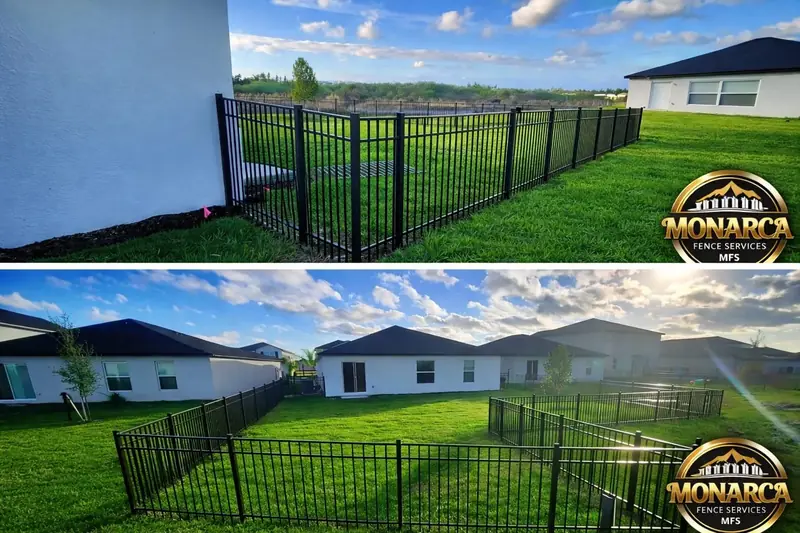
Mark the proposed enclosure on a survey or a simple sketch. Identify existing sections that may stay and openings that need to remain usable. Photos taken along the boundary help explain vegetation, grade and connections. Approximate measurements can start the discussion; final placement and dimensions need confirmation at the property.
Plan around the vehicles that actually enter
List the vehicles and equipment that regularly use the driveway, including deliveries or trailers where relevant. The opening must be considered with the approach and turning space, not as a standalone width. Show where a vehicle can wait and how the entrance will be used while other vehicles are parked inside.
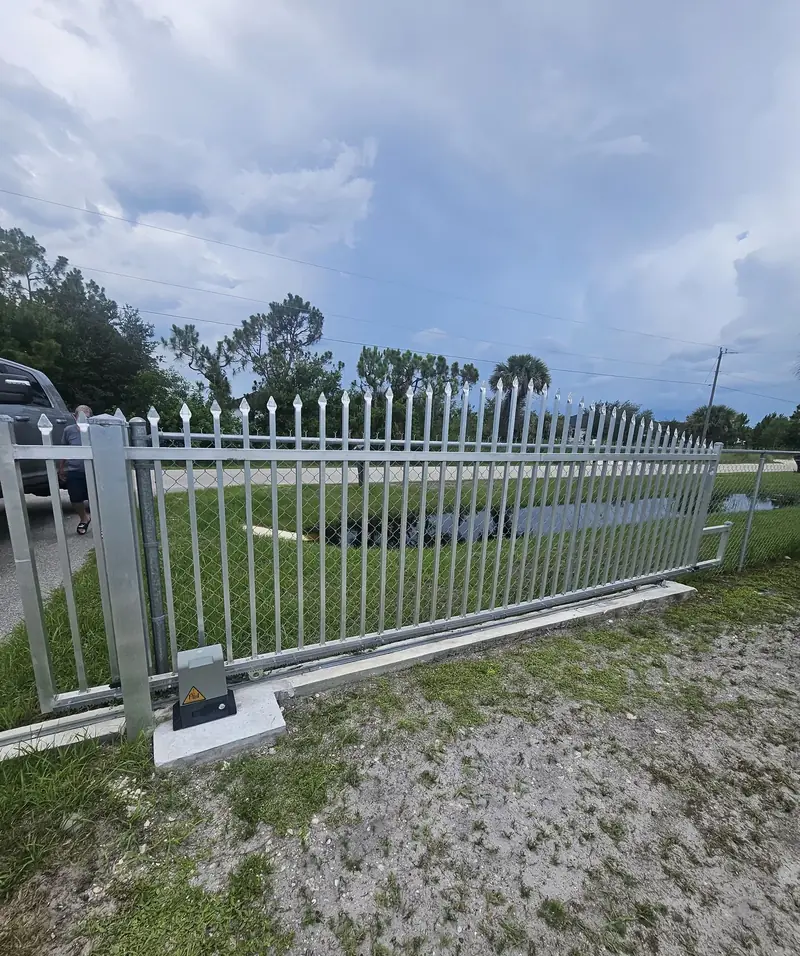
A swing gate needs room for its arc, while a sliding gate needs suitable travel space beside the opening. Surface and ground conditions also influence the design. A wide gate should not be selected from a photograph without reviewing its frame, supports, hardware and operating arrangement.
Choose a boundary style for each priority
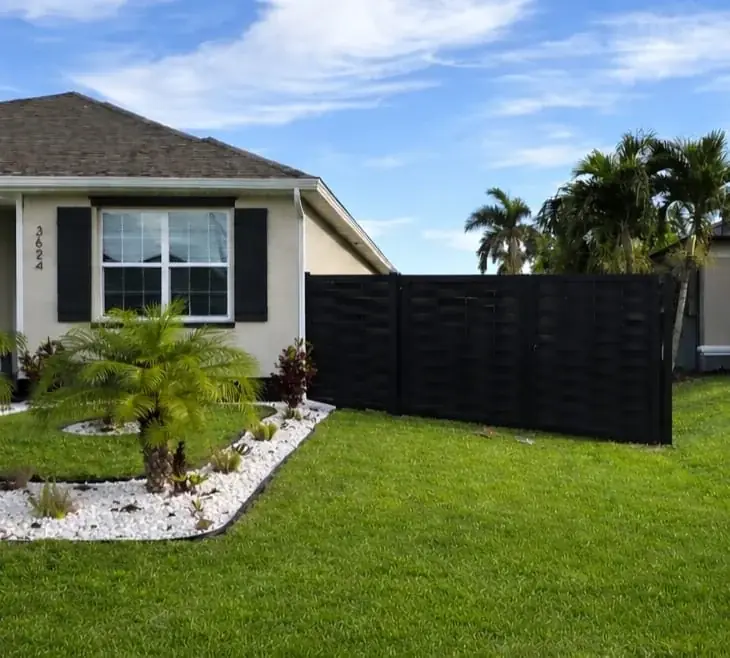
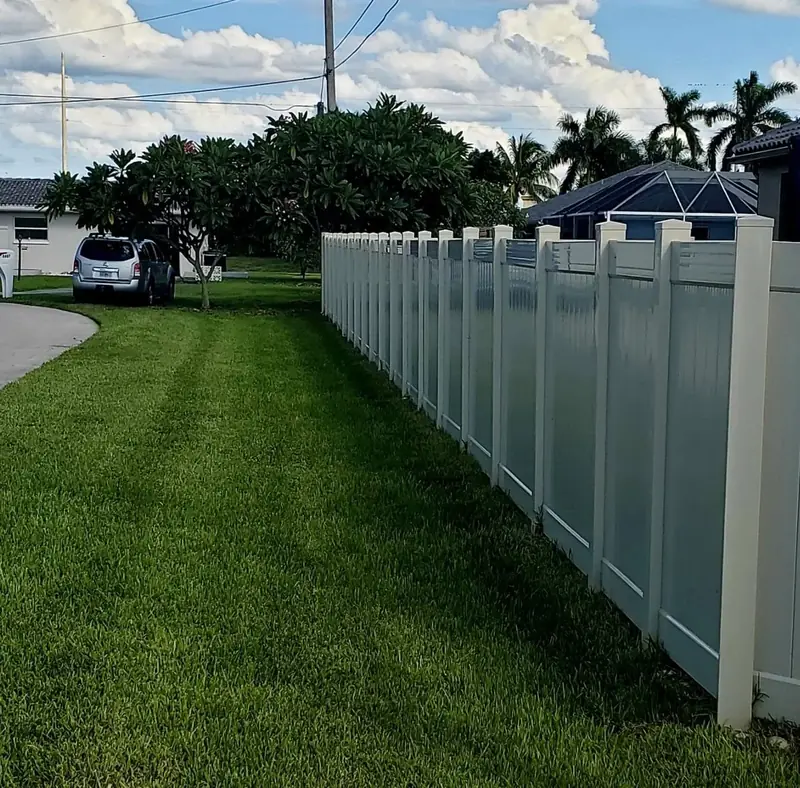
Chain-link fencing can provide an open, visible boundary, while a privacy section serves a different purpose near a home or outdoor seating area. Explain where visibility is helpful and where screening matters. One consistent style may suit the project, but it should be a deliberate choice rather than an assumption.
If work is being phased, identify future gate positions and transitions before the first run is installed. Ask whether the proposed pieces will be compatible with the later scope. Keep removal, clearing and preparation visible in the estimate so it is clear which conditions have been allowed for and which need further review.
Confirm the address, authority and next step
Provide the exact property location so the relevant city or county requirements can be identified. Do not assume that another property using a LaBelle mailing address follows the same process. Share any available survey, recorded constraints and association criteria with the project team before the final layout or fabrication is approved.
For a Monarca inquiry, send the location, photos, approximate lengths and the gate types you are considering. Use the LaBelle service page to coordinate availability and the appropriate next step for a site review. A well-defined first phase, with future access accounted for, is a more useful starting point than a generic gate size or an unsupported total price.
Useful references
Use the current information from the relevant authority or product manufacturer when confirming the requirements for your property and equipment.